
Hawaii Warrant Records
Hawaii warrant records come from courts and police across the state. You can search for Hawaii warrant records through a mix of free state tools and county police resources. The Honolulu Police Department lists wanted persons on its public site. Court case data lives on eCourt Kokua. The state Criminal Justice Data Center runs a name based search tied to adult convictions. Each county police department also holds warrant info for its own area. This page shows where to start, what each system offers, and how to request copies of a Hawaii warrant record in person, by mail, or online.
Hawaii Warrant Records Overview
Where to Find Hawaii Warrant Records
The main home for Hawaii warrant records is the state court system. Four circuit courts cover the islands. The First Circuit sits in Honolulu and serves Oahu. The Second Circuit covers Maui, Molokai, and Lanai. The Third Circuit handles Hawaii Island. The Fifth Circuit takes in Kauai and Niihau. Each court files and stores warrant records for its own area. Basic case data for most case types can be viewed for free. Case pleadings and docket entries may be pulled up at the courthouse.
Police agencies in each county hold their own warrant files too. Active warrants are entered into the state electronic bench warrant system. Access to that system is limited to law enforcement. Public users can still view wanted persons lists on police sites and crime stoppers pages. The state Sheriff Division carries out law enforcement services statewide and serves many warrants tied to court matters. Deputy sheriffs arrest, book, and process people entering the system. They also handle inter-island transport for court appearances.
A name based conviction check for Hawaii warrant records is handled by the Hawaii Criminal Justice Data Center (HCJDC). The HCJDC is the state office that issues criminal history record checks, sometimes called a Police Clearance or a Police Abstract. Start with the HCJDC criminal history page for the full process.
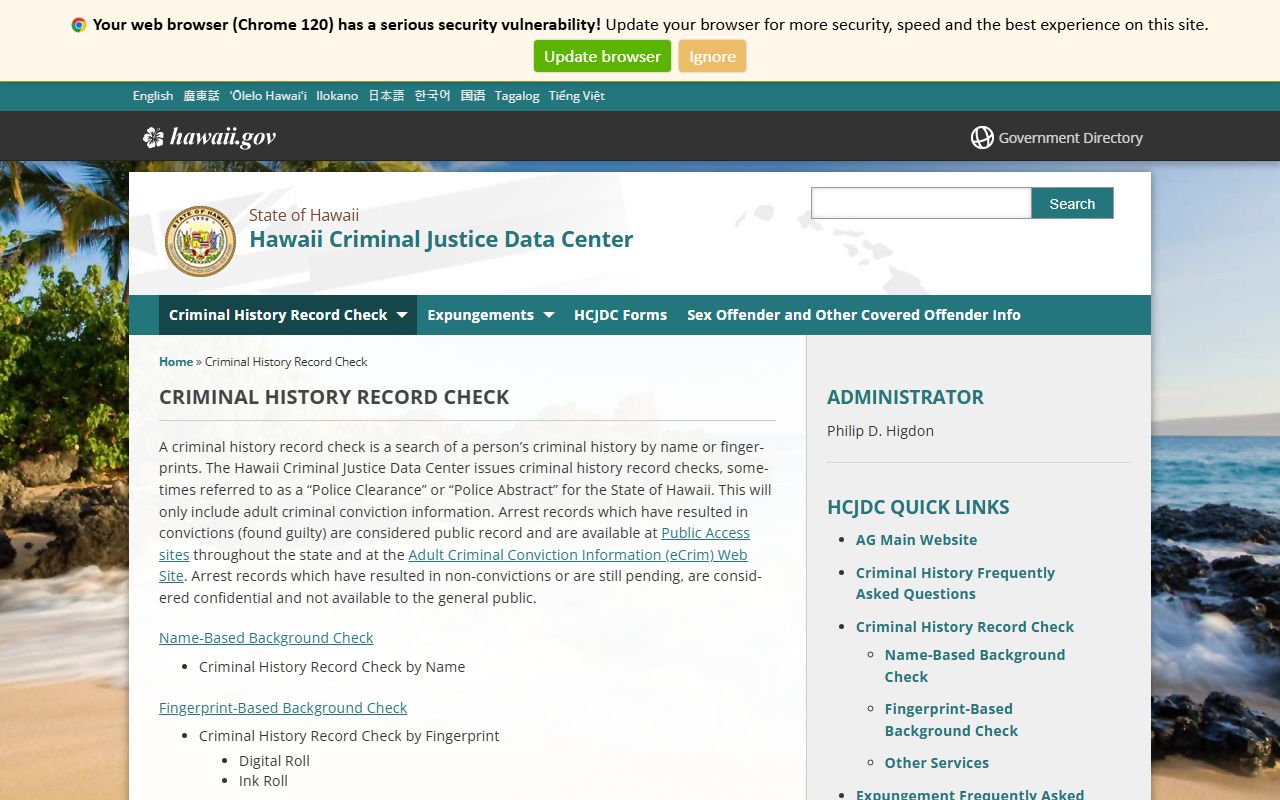
The HCJDC main office sits at 465 S. King Street, Room 102, Honolulu. The phone line is (808) 587-3279. Staff are open Monday through Friday from 8 a.m. to 4 p.m.
How to Search Hawaii Warrant Records
You have a few ways to run a Hawaii warrant records search. The fastest free path is online. The court portal eCourt Kokua gives access to public info from traffic cases, District Court and Circuit Court criminal, Family Court criminal, civil cases, Land Court, Tax Appeal Court, and appellate cases. You can search by name or case number. Most basic case info is free to view. PDF copies of documents are $3 for up to 30 pages.
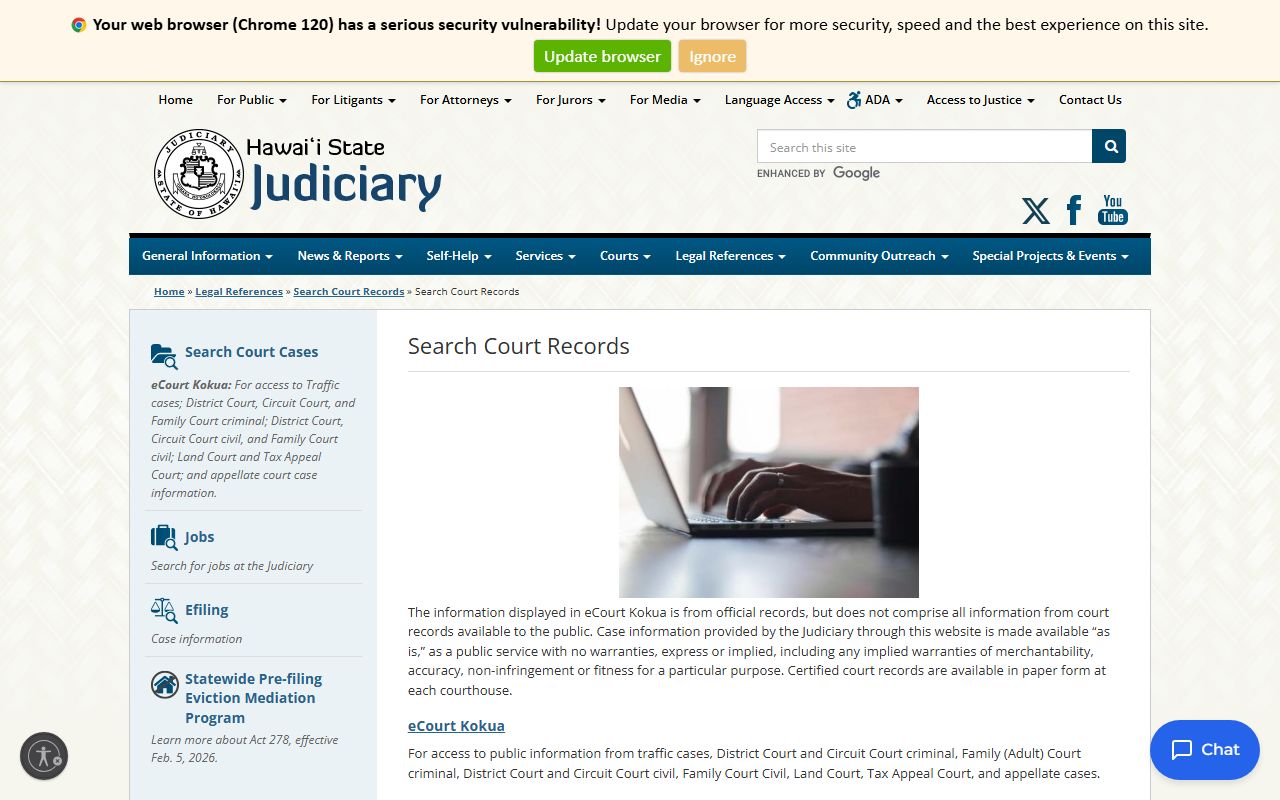
The info on eCourt Kokua is made public as is. It will not include sealed files, sealed docs, or fields like Social Security numbers. Records Rule 9 of the Hawaii Court Records Rule governs what is blocked from online view.
The state also runs an eBench Warrant System. The Hawaii State Judiciary eBench Warrant system is a secure portal that lets police and justice agencies search traffic, criminal, and non Family Court civil warrants. Data is refreshed more than once each day. It is not open to the general public, but the infrastructure supports every county court.
For in person access, the state keeps public access terminals at courthouses. First Circuit terminals are at Ka'ahumanu Hale in Honolulu, Kauikeaouli Hale, and the Kaneohe, Wahiawa, and Waianae district courts. Hours run from 7:45 a.m. to 4 p.m. on weekdays. Learn more from the court records request page.
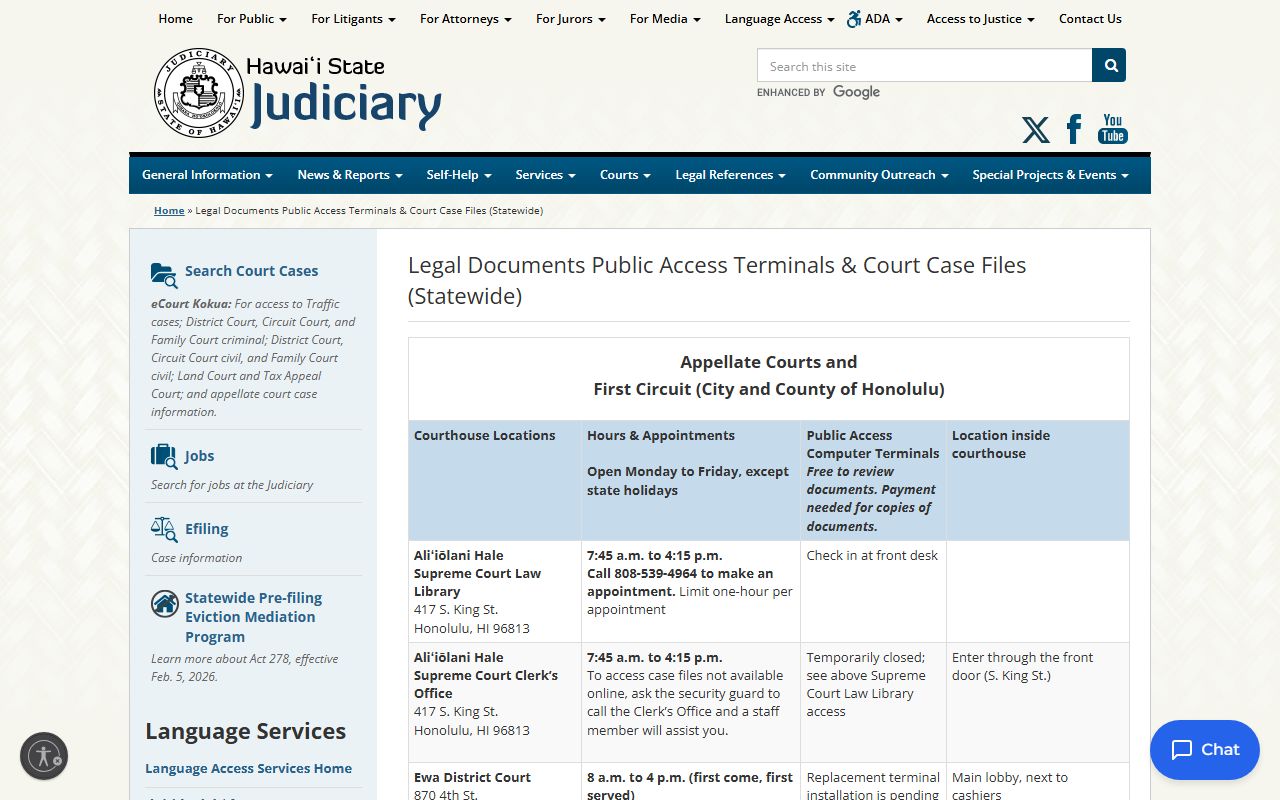
A free public access terminal can save you the cost of online document fees. Plan a visit during weekday business hours and bring a photo ID.
Types of Warrants in Hawaii
A warrant is a court order. It lets the police carry out a set action. The most common types in Hawaii are arrest and search warrants. There are others too. You may hear about bench warrants, grand jury warrants, parole revocation, HOPE Probation warrants, juvenile, traffic, misdemeanor, and felony. Each class has its own rules for service and for how long it stays valid.
Here are the main warrant types you will see in Hawaii warrant records:
- Arrest warrants under HRS Section 803-1
- Bench warrants for failure to appear in court
- Search warrants under HRS Section 803-31
- Penal summons under HRS Section 803-6
- Extradition warrants for transfer to other states
- Administrative warrants for regulatory checks
Arrest warrants stay active until served or recalled by a judge. They do not time out on their own under state law. A bench warrant is used when a person misses a court date. Search warrants must be carried out within ten days of issue under HRS Section 803-36. The Honolulu Police Department also notes the rule that a warrant should not be served on closed premises between 2200 and 0700 hours unless there is legal cause. Read the full rule on the HPD warrants policy page.
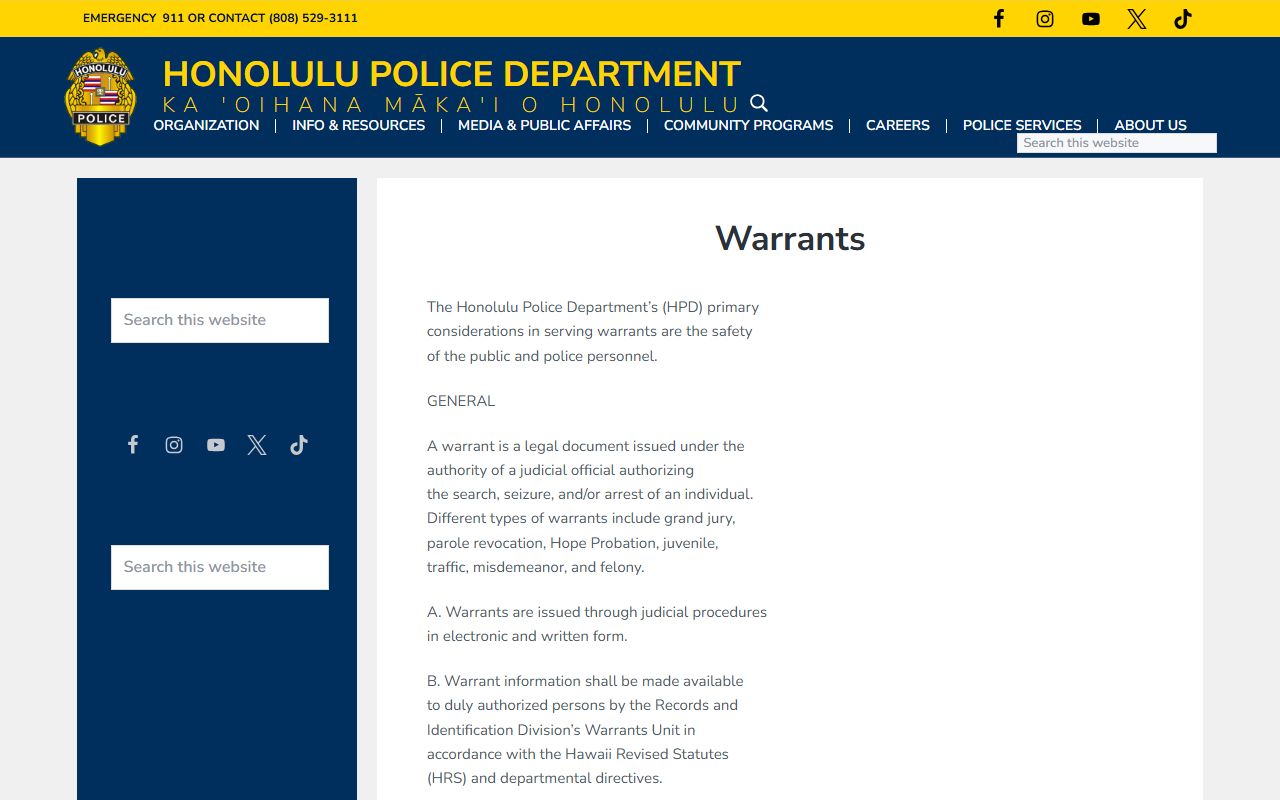
This policy guides how patrol officers confirm warrants through the Communications Division before making an arrest.
Note: Each time an officer tries to serve a warrant in Hawaii, HPD uses form HPD-222 in the Case Report System to track the attempt.
Hawaii Warrant Laws and Rules
The core rules for Hawaii warrant records sit in Hawaii Revised Statutes Chapter 803. The chapter covers how warrants are defined, how they are issued, and how they are served. You can read the full text at the Hawaii Revised Statutes Chapter 803 page. Section 803-1 sets out that an arrest warrant is a written order that commands a police officer to arrest a person and bring that person before a judge. Section 803-31 defines a search warrant as a written order to search for personal property.
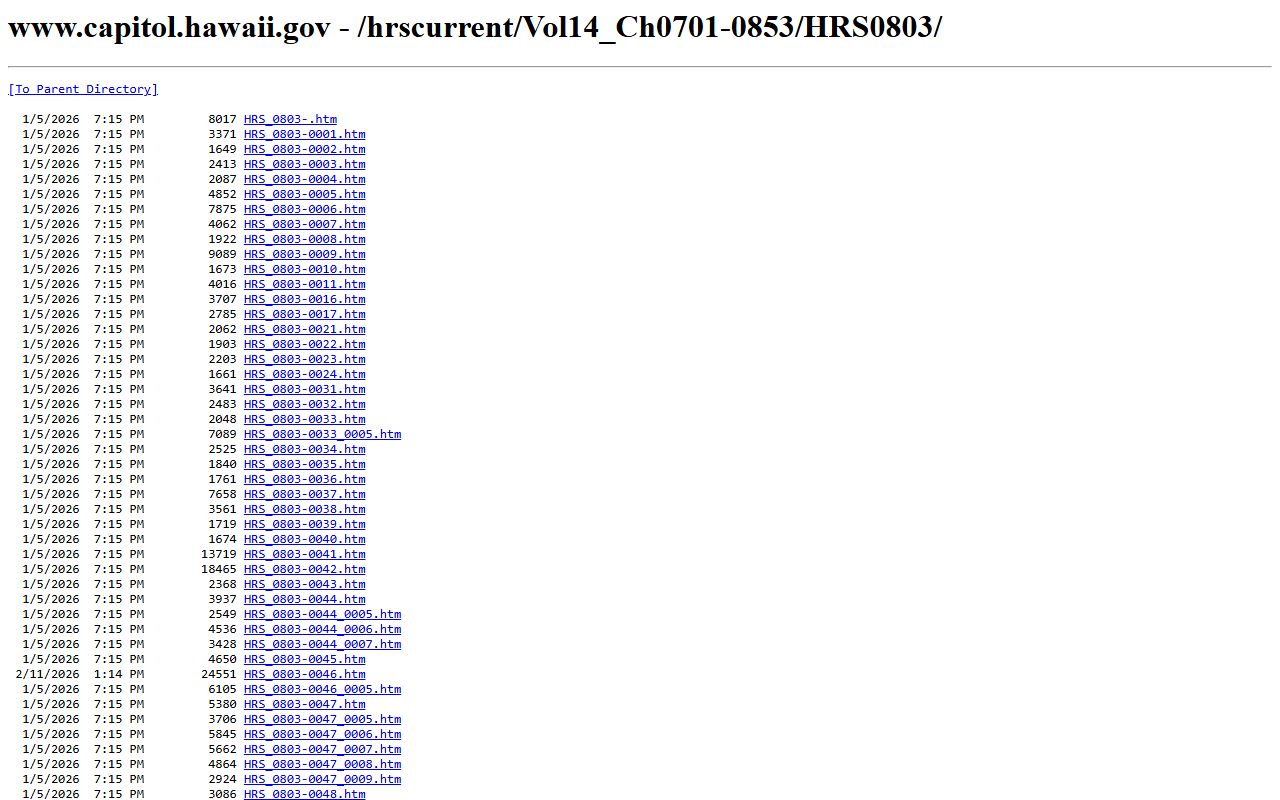
These sections list the content each warrant must have, the scope of who may serve it, and the time frame for action.
Section 803-33.5 of the Hawaii Revised Statutes allows a judge to issue a warrant based on sworn oral statements or electronic messages. This rule set the stage for the state's e-warrant program. Since January 1, 2020, the Second, Third, and Fifth Circuits have run pilots with county police and prosecutors. As of 2024, the Second Circuit processes arrest warrants, search warrants, and judicial determinations of probable cause by e-warrant. The Third Circuit moved to e-warrants for all search warrants by April 2024. The Fifth Circuit runs e-warrants for blood draws, vehicle searches, and cell phone searches.
Public access to Hawaii warrant records falls under the state Uniform Information Practices Act (UIPA) in HRS Chapter 92F. UIPA says all government records are open to public inspection unless access is closed by law. Under Section 92F-13, records with a clear privacy concern may be held back. Arrest records that led to a conviction are public. Arrest records that did not lead to a conviction, or that are still pending, are kept confidential and shared only with law enforcement and some named agencies.
Cost to Access Warrant Records
Fees for Hawaii warrant records vary by source. The HCJDC sets its own cost list for criminal history work. A public access printout is $25. A name check done by HCJDC staff is $30. A fingerprint check is $55 in person or $35 by mail. Certification is $20. First expungement is $35. A second or later expungement is $50. Full fee info sits on the HCJDC FAQ page.
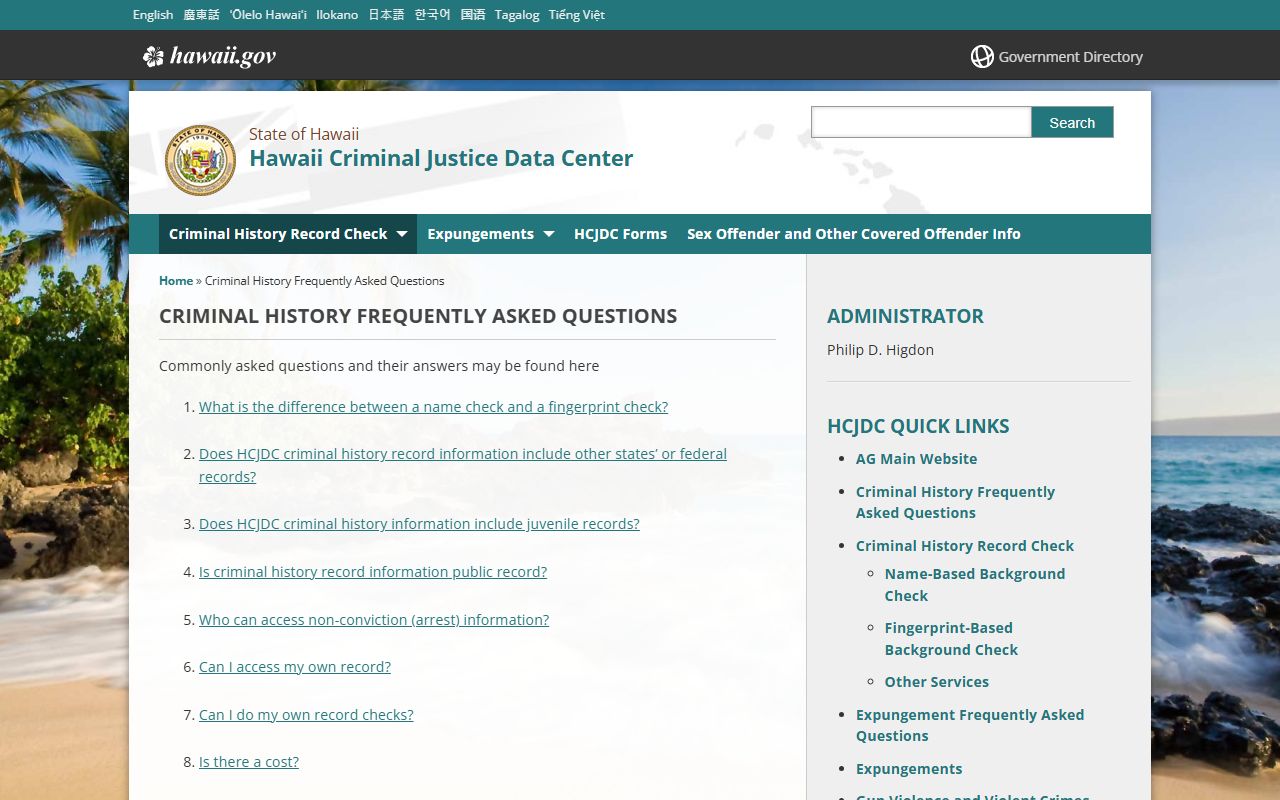
These fees cover work done by state staff and apply across all Hawaii warrant records requests at the HCJDC.
Court docs on eCourt Kokua are $3 for a PDF of up to 30 pages. Each page past that is 10 cents. A quarterly subscription is $125 and a full year is $500 for unlimited downloads. The eCrim service for adult conviction info runs $5 for each name search and $12 for an official report. Records requests at county police departments also carry small per page fees.
How to Request a Hawaii Warrant Record
A few paths work for a Hawaii warrant record request. The choice depends on the type of record you need. For a conviction history, you can use the state public access sites list. Printouts are made at each location for $25. Sites are spread across the islands. View the full list on the HCJDC public access sites page.
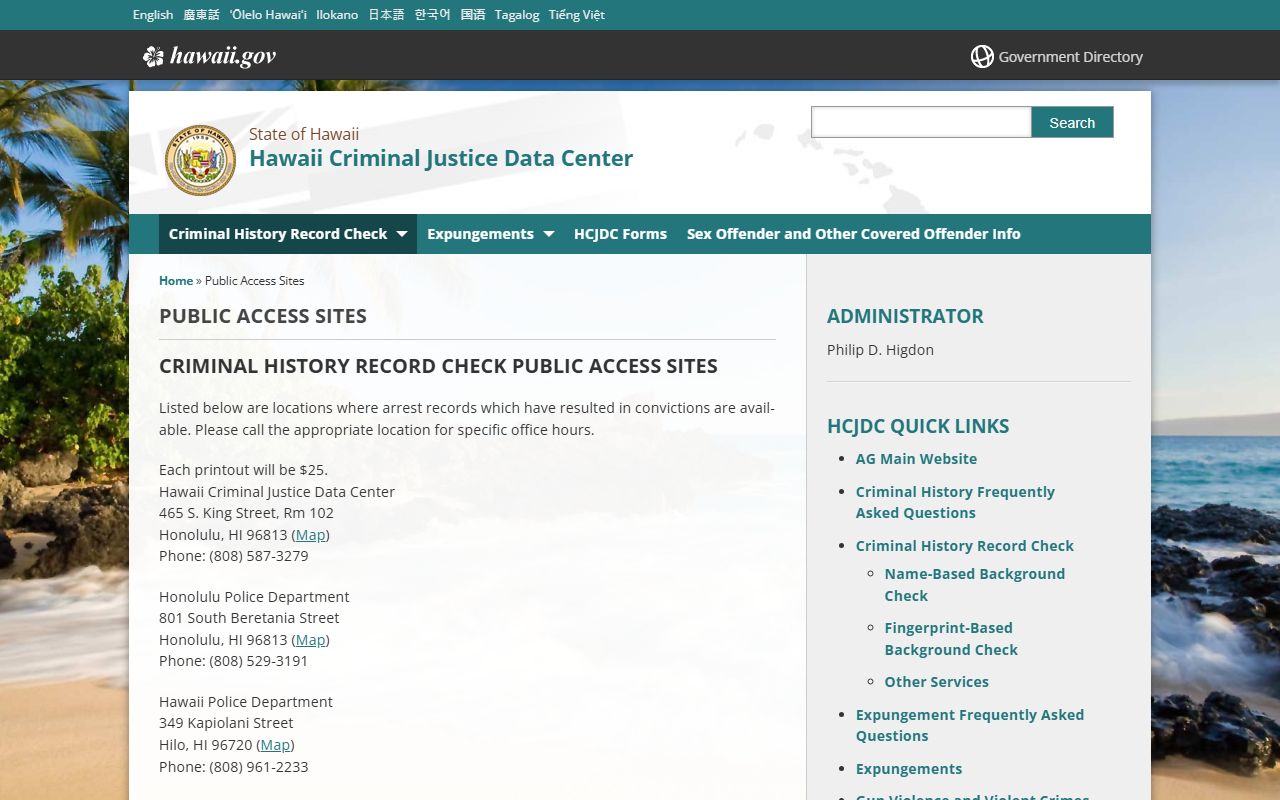
Public access sites include the HCJDC office, the Honolulu Police Department, the Hilo and Kona police stations, the Kauai police department, and the Maui police department.
For a court case file, visit the courthouse in the circuit where the case was heard. Staff can pull records by party name or case number. Basic copies are by the page. Certified copies carry the court seal and cost more. Some courts accept mail requests with a written form and a check. Older case files over five years old may sit off site, so call ahead.
For a wanted persons check in Honolulu, the public can view the HPD Wanted Persons page. The list shows names and photos for open cases in the county.
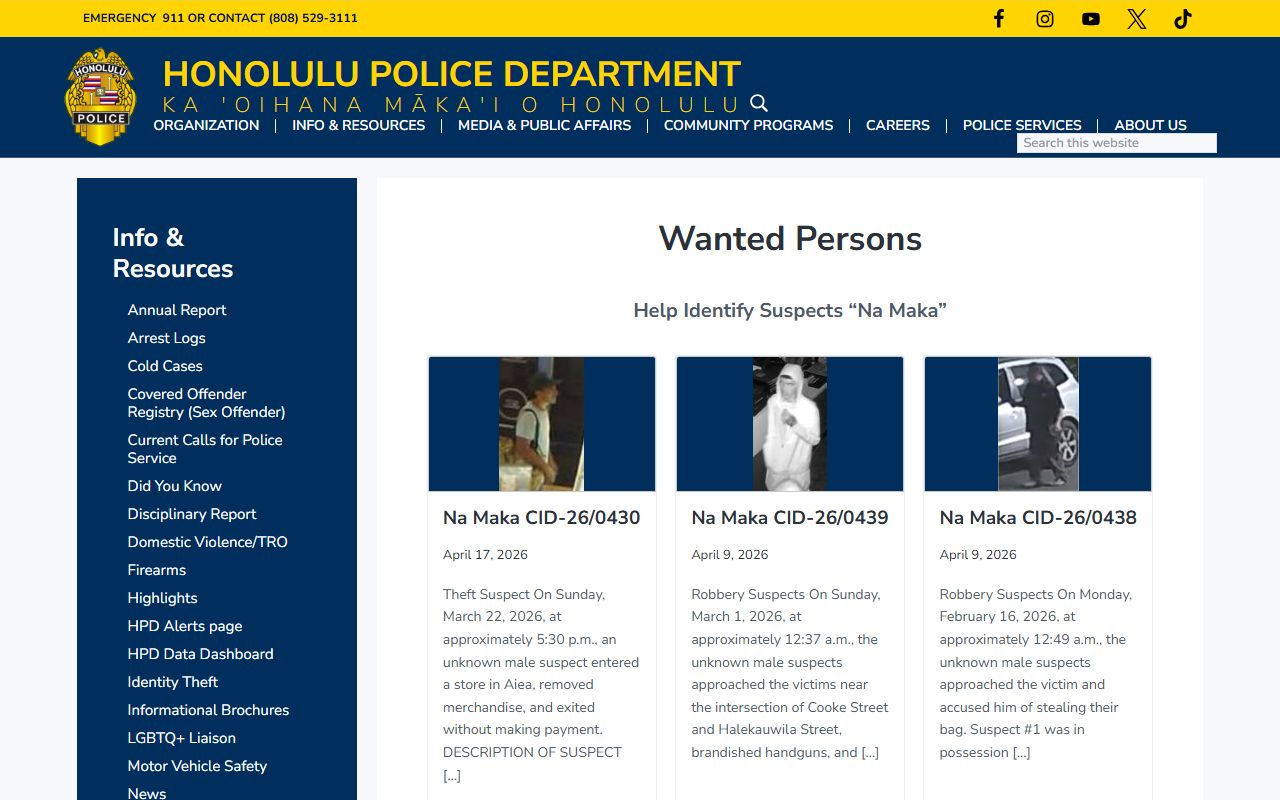
Call the HPD Records and Identification Division at (808) 723-3258 for active warrant info. Never approach a subject on the list.
Wanted Persons and Crime Stoppers
Each county has its own wanted persons tools. In Honolulu, the public can send tips to CrimeStoppers Honolulu on (808) 955-8300 or by text with the word CRIME on Hawaii cell phones. All tips stay private. The mailing office is at PO Box 22375, Honolulu, HI 96823. Law enforcement will confirm any warrant before making an arrest.
The state Department of Law Enforcement warns the public of a scam. Callers pose as police and say a person has missed jury duty or has a warrant. They then ask for money by wire or bitcoin. Real police will never ask for money by phone. Read the warning on the Hawaii Department of Law Enforcement home page.
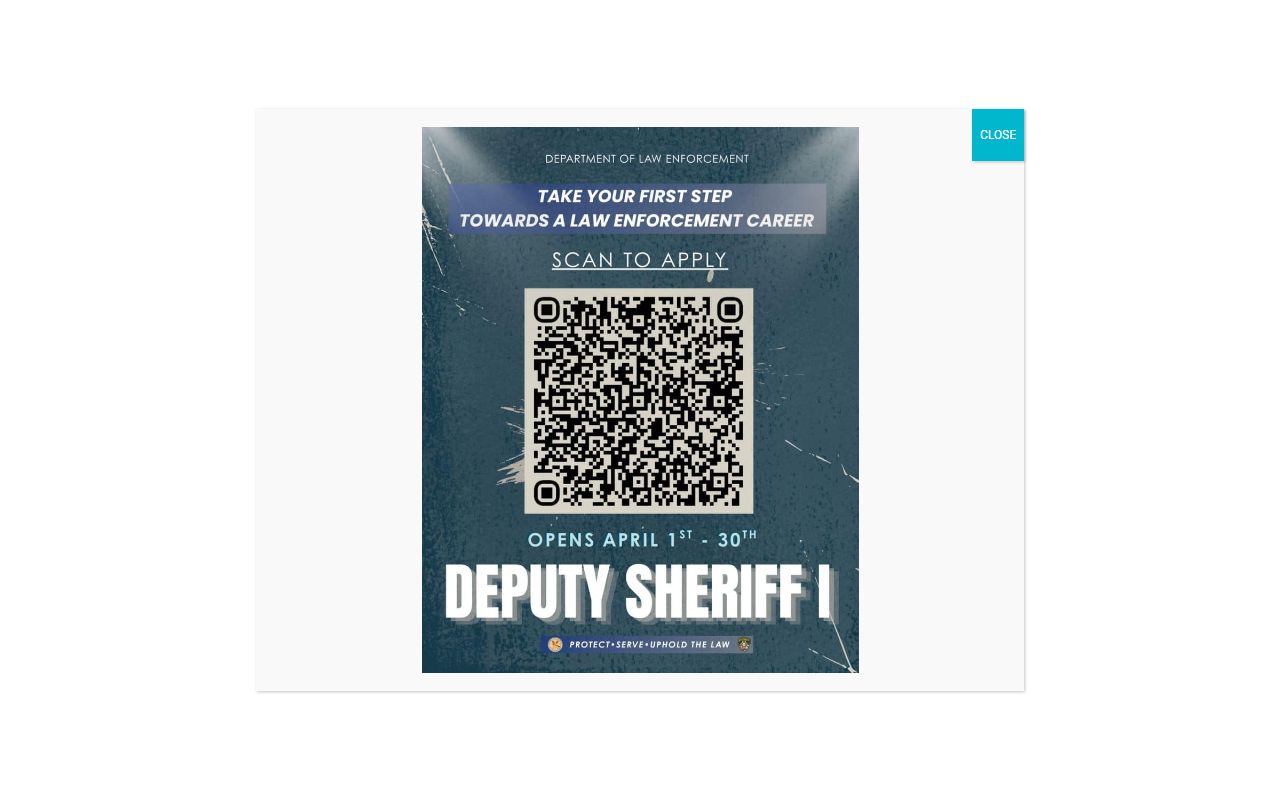
Keep a record of any such call and report it to local police. No legit Hawaii warrant will ever be served by phone.
For a fuller look at the state agency that serves warrants in court and state buildings, visit the Sheriff Division page.
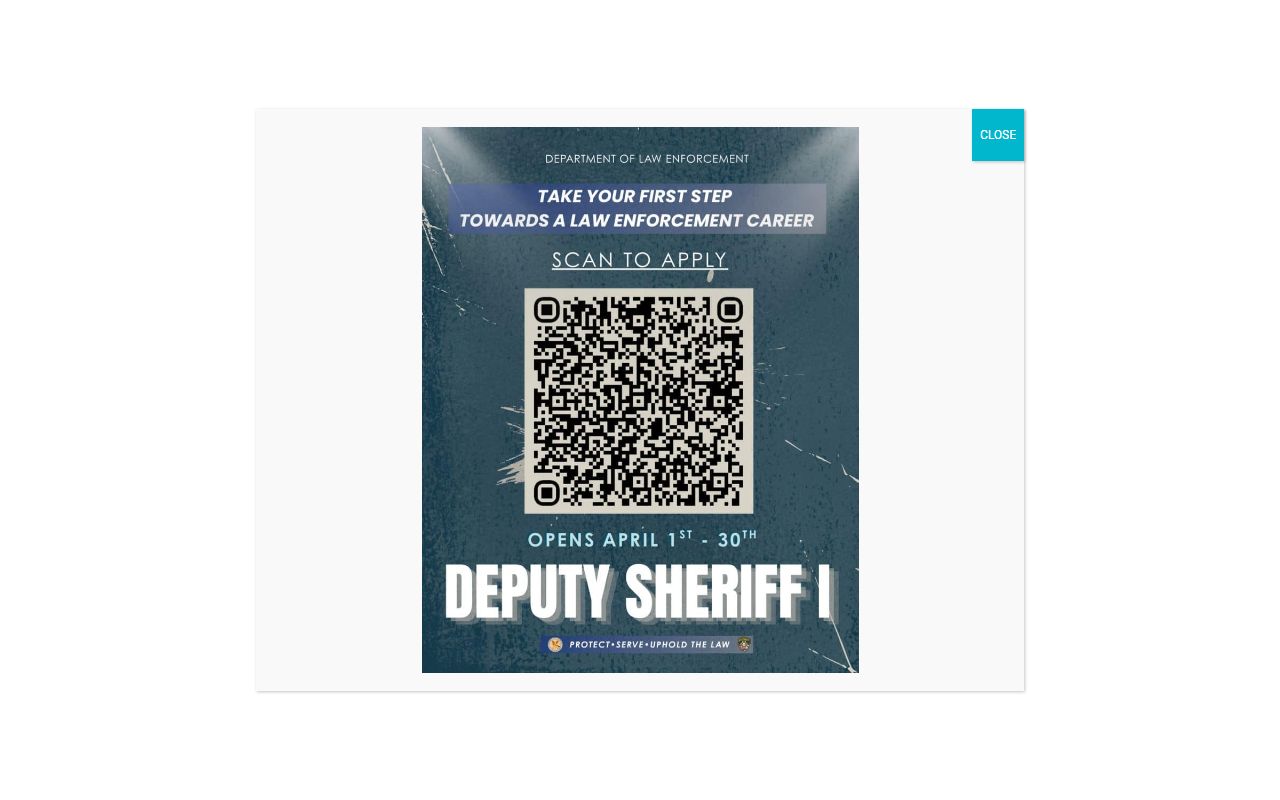
The Sheriff Division also serves arrest warrants and writs of possession under HRS Section 803-35.
Clearing a Hawaii Warrant Record
If you were arrested in Hawaii but not found guilty, you can ask to have that arrest sealed. The state calls this an expungement. Under HRS Section 831-3.2, the arrest must meet set rules. The fee for a first expungement is $35. A second or later request is $50. Both fees include a $10 non-refundable processing fee. Full info is on the HCJDC expungements page.
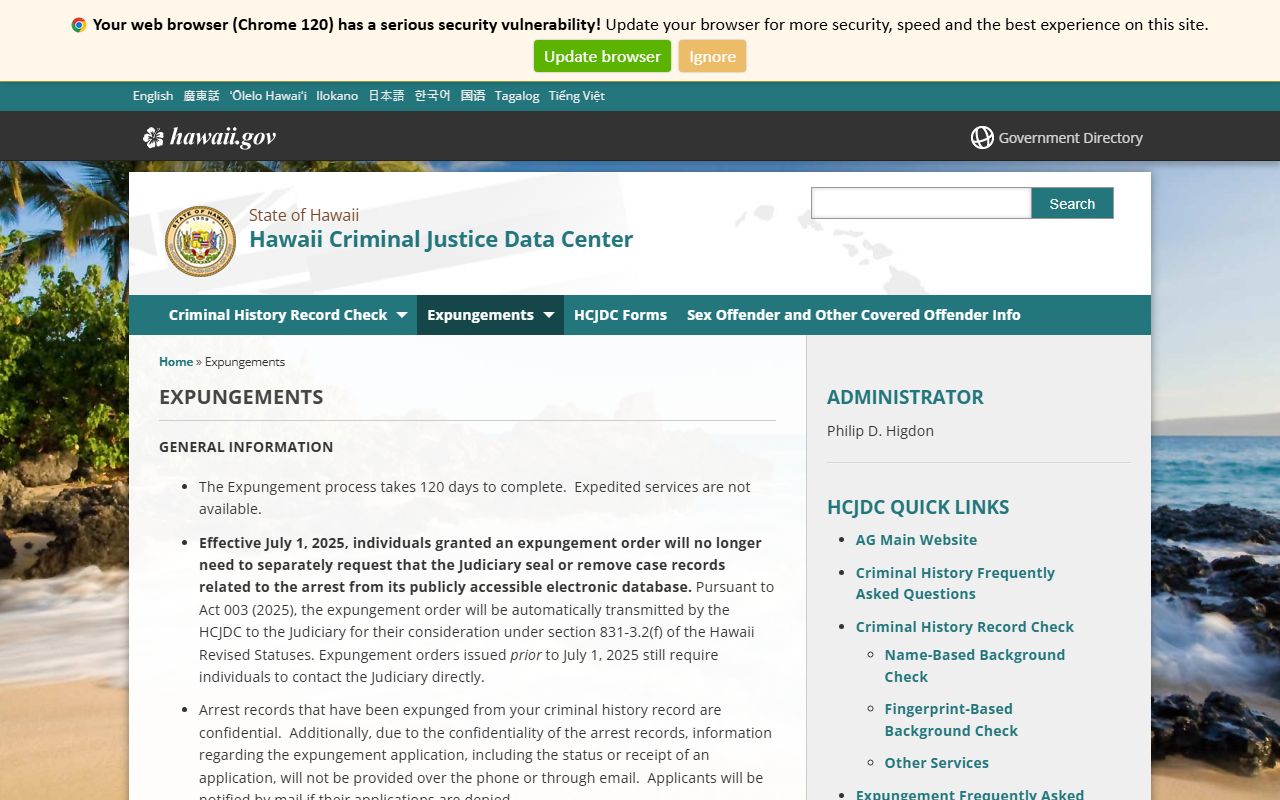
Pay by cashier's check or money order made out to State of Hawaii. The process takes about 120 days. The certificate is mailed to the address on your form. No rush service is offered.
Note: Arrest records that have been cleared from your file are kept confidential under Hawaii law and are not shared with the general public.
Are Hawaii Warrant Records Public
Yes. Most Hawaii warrant records tied to a conviction are open to the public. The state Uniform Information Practices Act, HRS Chapter 92F, is the main law on this point. Section 92F-11 states that all government records are open unless a law closes them. Arrest records that led to a guilty finding are public. Arrest records that did not lead to a conviction, or that are still pending, are kept out of public hands.
Non-conviction data may only be viewed by named law enforcement agencies and some state offices. Sealed cases and sealed docs are also out of reach. Records of juvenile cases are kept private too, unless the case was moved to adult court. Hawaii law aims to keep a fair line between the public's right to know and a person's right to privacy.
Browse Hawaii Warrant Records by County
Each of the five Hawaii counties has its own set of local offices for warrant records. Pick a county below to find the police department, court, and contact info for that area.
Warrant Records in Major Hawaii Cities
Residents of Hawaii cities deal with warrants through their county police and the circuit court that covers their island. Pick a city below to find out where to go for local warrant info.